
Bioengineering Associate Degree at Bunker Hill CC: 2-Year Path
Launch your biotech career with this Bioengineering and Biomedical Engineering Associate's degree at Bunker Hill CC, with hands-on lab training and clear transfer pathways.

By Frederick Hill
For students who are fascinated by the intersection of medicine, biology, and cutting-edge technology, finding an affordable entry point into this complex field can feel difficult. The Boston area, a global hub for healthcare and innovation, offers a unique solution through a two-year program that emphasizes hands-on laboratory skills and practical knowledge. This Bioengineering and Biomedical Engineering Associate's degree, usually 2 years In-person at Bunker Hill Community College, provides a direct pathway for those who want to work in research labs, clinical settings, or biotechnology manufacturing without committing to a four-year university immediately. It serves as a strategic first step for both immediate employment and future academic transfer.
This guide explains what makes this specific associate degree program valuable, the career and academic pathways it unlocks, and the details of the curriculum and admissions process. Whether you are a recent high school graduate, a working professional looking for a career change, or a military veteran, understanding this option could be the catalyst for a rewarding career in the life sciences. The program is designed to be rigorous yet accessible, ensuring that graduates possess the technical acumen demanded by the region's top employers.
Why Choose Bunker Hill for Biomedical Engineering?
Bunker Hill Community College (BHCC) is strategically located in Charlestown, Massachusetts, placing students in the heart of one of the nation's most vibrant life science ecosystems. The campus is minutes away from world-renowned hospitals, research institutions like MIT and Harvard, and a dense concentration of biotech and pharmaceutical companies. This geographic advantage translates into significant networking and internship opportunities that are often unavailable to students in less centralized locations.
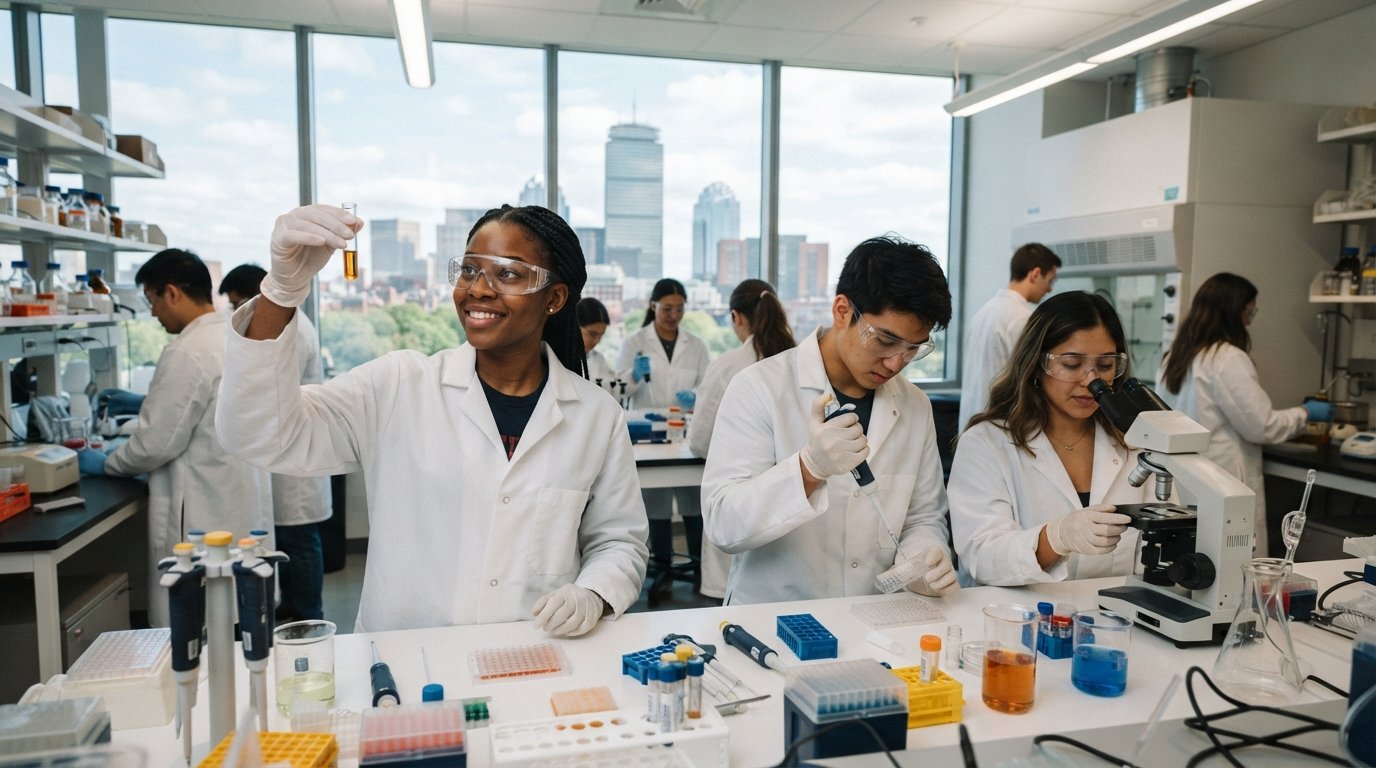
The Bioengineering and Biomedical Engineering Associate's degree, usually 2 years In-person at Bunker Hill Community College, is not just a series of lectures; it is a hands-on training ground. The program utilizes state-of-the-art laboratory facilities where students learn to operate the same equipment used in professional settings. This includes bioreactors, spectrometers, and polymerase chain reaction (PCR) machines. The emphasis on practical skills means that graduates are often work-ready on day one, which is a key reason why local employers value BHCC alumni.
Furthermore, BHCC offers a supportive learning environment with smaller class sizes compared to large universities. This allows for more personalized instruction from faculty who often have extensive industry experience. The college also provides robust support services, including tutoring, academic advising, and career counseling, all designed to help students navigate the rigorous curriculum and plan their next steps effectively.
Core Curriculum and Technical Skills
The curriculum for an associate degree in this field is carefully balanced between foundational science and specialized engineering principles. Students should expect to take courses in general and organic chemistry, biology, and physics, alongside mathematics through calculus. These core sciences provide the necessary foundation for understanding the biological systems and physical principles that biomedical engineers work with daily.
Specialized coursework typically includes Introduction to Biomedical Engineering, Biomaterials, Biomechanics, and Instrumentation. In these classes, students apply scientific principles to solve medical and biological problems. For example, a student might complete a project where they test the tensile strength of a new polymer for use in a prosthetic limb or calibrate sensors used to monitor patient vitals. This practical application of knowledge is what separates an engineering curriculum from a pure science curriculum.
Beyond the technical coursework, the program places a strong emphasis on professional skills, which are critical for success in any engineering role. Students learn how to write technical reports, maintain meticulous laboratory notebooks, and work effectively in multidisciplinary teams. Here are the key learning outcomes graduates can expect:
- Proficiency in standard laboratory techniques including cell culture, chromatography, and spectroscopy.
- The ability to apply principles of statics, dynamics, and fluid mechanics to biological systems.
- Competence in using industry-standard software for data acquisition and analysis.
- A solid understanding of FDA regulations and quality control standards in the medical device and pharmaceutical industries.
These skills are honed over the course of four academic semesters. The final semester often includes a capstone project or a practical externship, allowing students to synthesize their learning and demonstrate their capabilities to potential employers.
Career Opportunities After Graduation
Graduates with this associate degree are qualified for several technical roles that are in high demand within the Massachusetts economy. While a bachelor's degree is typically required for the title of 'Biomedical Engineer,' an associate degree prepares students for vital support roles that are essential to the research and development process. These positions are often the entry point for individuals to gain industry experience and often come with tuition reimbursement benefits for those who wish to continue their education.
Typical job titles for graduates include Biomedical Equipment Technician (BMET), Quality Control Technician, Clinical Research Assistant, and Manufacturing Technician. In these roles, professionals are responsible for maintaining and repairing medical equipment, testing the safety and efficacy of new products, assisting in clinical trials, or operating the machinery that produces sterile medical devices.
The job outlook for these roles is very strong. The healthcare industry continues to rely heavily on advanced technology, and there is a persistent need for skilled technicians to keep everything running safely. Employment in this sector is projected to grow much faster than the average for all occupations, driven by an aging population and the continued innovation of medical technology.
Transfer Pathways to a Four-Year Degree
For many students, the Bioengineering and Biomedical Engineering Associate's degree, usually 2 years In-person at Bunker Hill Community College, serves as the first half of a bachelor's degree. BHCC has established strong transfer agreements, often called articulation agreements, with several state and private universities in Massachusetts. These agreements ensure that credits earned at BHCC will count toward a student's major requirements at the four-year institution, allowing them to enter as a junior.
This pathway is a highly cost-effective strategy. Students can complete their general education and introductory engineering courses at the significantly lower community college tuition rate, saving thousands of dollars before transferring. Furthermore, students who transfer often find they are better prepared academically than their peers who started at the university as freshmen, because they have already mastered the rigorous laboratory and study skills required for upper-level coursework.
Popular transfer destinations for BHCC graduates include the University of Massachusetts campuses (particularly Lowell and Amherst), Northeastern University, and Wentworth Institute of Technology. It is crucial for students to work closely with their academic advisor from day one to ensure that the courses they select at BHCC meet the specific requirements of their intended transfer destination. This careful planning prevents wasted time and credits.
Admissions Requirements and Program Cost
Admission to Bunker Hill Community College is open, meaning that all applicants with a high school diploma or GED are accepted. However, students declaring this major must meet certain course prerequisites in math and science to succeed. Typically, incoming students should have completed high school algebra and geometry, and it is highly recommended that they have taken chemistry and biology.
Upon acceptance, students will take a placement test to determine their starting point in mathematics and English. Those who do not place directly into college-level calculus or composition may need to complete developmental courses first, which can extend the length of the program. The college offers summer bridge programs and math boot camps to help students refresh their skills and place into higher-level courses, ensuring they can complete the associate degree in the two-year timeframe.
Regarding cost, community college remains one of the most affordable higher education options in the country. In addition to low per-credit tuition rates, the majority of BHCC students qualify for financial aid, including federal Pell Grants and Massachusetts state grants. The college also offers numerous scholarships specifically for STEM majors. For a detailed breakdown of current tuition and fees, students should check the official BHCC website, but the investment is typically a fraction of the cost of the first two years at a private university.
Matching Your Program to Your Career Goals
Selecting the right college program is a significant step, and it is important to align your choice with your long-term vision. The resources provided by college matching services can help clarify the options available in your region. As you evaluate this specific associate degree, consider how the practical, in-person laboratory experience at BHCC aligns with your preferred learning style, especially if you thrive in a structured, hands-on environment rather than a fully online setting.
Since this is a decision that impacts your future, exploring all your options is a wise move. You can compare the technical focus of this degree with other educational opportunities to ensure you are making an informed choice. For instance, some students are more interested in the systems-level design of devices, which might point them toward a different type of engineering program, as discussed in our guide on a Mechanical Engineering Associate's Degree at Everett CC. This comparison can help you determine whether your interest lies more in biological systems or mechanical systems, as both are vital to the medical field.
To get a broader view of what other schools offer, whether in biomedical fields or other allied health professions, prospective students can utilize independent platforms to compare program outcomes and costs. Visiting a resource like CheapOnlineEducation can provide additional context on how different types of programs, both online and on-campus, compare in terms of flexibility and curriculum.
Financial Aid and Support Services
Navigating the financial aspects of college can be daunting, but BHCC has a dedicated team to help students secure the funding they need. The Financial Aid office assists with completing the Free Application for Federal Student Aid (FAFSA) and identifying state and institutional aid opportunities. They also guide students through the process of applying for work-study positions, which can provide valuable income and experience right on campus.
In addition to financial support, BHCC is committed to student success through its comprehensive support network. The college offers a STEM Starter Academy, which provides mentorship, tutoring, and cohort-based learning communities for students in science and technology programs. This academy helps build a sense of community and provides peer support, which is often crucial for retaining students in demanding technical fields.
The college also has a robust Office of Internship and Career Development. This office organizes career fairs, mock interview sessions, and resume workshops. They maintain strong relationships with regional employers who specifically look to BHCC for qualified interns and full-time employees. This direct connection to industry is a significant advantage that helps students translate their academic achievements into tangible career opportunities upon graduation.